![hybrid-so-france.jpg]()
Side hustles in France tend to fall into one of two camps. There’s the micro-entrepreneur running a small, steady activity on the side, and there’s the freelance consultant juggling several client relationships that could realistically grow into a full business. Both need more structure than a laptop and a café table eventually, but not necessarily the same structure. Here’s how each tends to hit that wall, and what closes the gap.
Why This Trend Is Accelerating in France
France has one of the most accessible frameworks in Europe for starting a side activity. Registering as a micro-entrepreneur takes a few minutes online through URSSAF, involves no upfront capital, and comes with simplified tax and social charge calculations based on turnover rather than complex accounting. That simplicity is a big part of why so many salaried employees in France run something on the side, whether it is e-commerce, consulting, tutoring, or creative freelance work.
The number of people doing this has grown steadily for years, helped along by remote and hybrid work arrangements that free up time previously spent commuting. A recent Allwork.Space report found this isn’t just a French phenomenon: remote workers internationally are increasingly holding down multiple income streams at once, in some cases earning well beyond a single salary as a result. France’s combination of a straightforward registration process, a large freelance and consulting culture, and strong digital infrastructure makes it a natural fit for that pattern.
What the simplified registration process doesn’t solve is everything that happens after registration: how the business looks to a client, whether it can be reached professionally, and where a meeting happens if one is needed. That’s usually where the gap between “properly registered” and “properly set up” becomes visible.
The Micro-Entrepreneur: Small, Steady, and Growing Quietly
This is the person running an online shop, a translation service, or freelance design work registered under France’s micro-entrepreneur (formerly auto-entrepreneur) status. The activity is properly declared with URSSAF, has a SIRET number, and generates real, if modest, income. What it usually lacks is anything resembling a business front.
Invoices carry a home address. Client calls come through a personal mobile. Meetings, when they happen, take place wherever is convenient that week. This works fine while clients come from personal referrals. It becomes a weaker look the moment a client checks the business online, or a corporate client’s procurement process expects a proper registered address before paying an invoice.
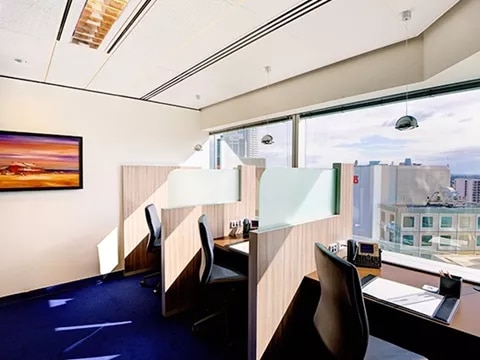
For this profile, a virtual office tends to be the better fit. It provides a prestigious Paris address, such as Avenue Kléber near the Arc de Triomphe, a local French phone number answered by a dedicated receptionist, and mail handling, all without the cost of leasing space that would go mostly unused. Most virtual office packages also include a set number of coworking hours each month, which covers the rare occasion a proper desk or meeting room is actually needed.
The Freelance Consultant: Multiple Clients, Growing Fast
This is the person consulting across several client accounts at once, often close to the point where the side activity could become the main one. Client meetings happen more regularly, sometimes in person, and the work increasingly resembles running a small firm rather than a side project.
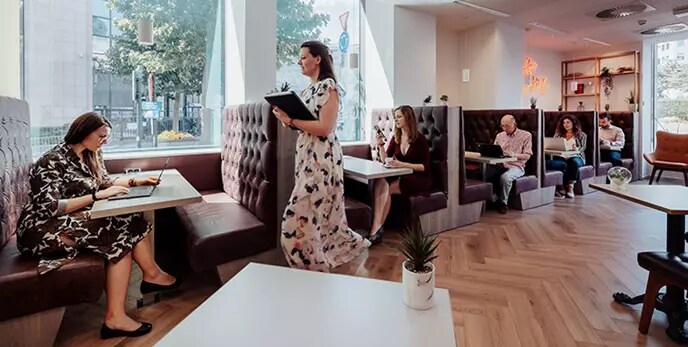
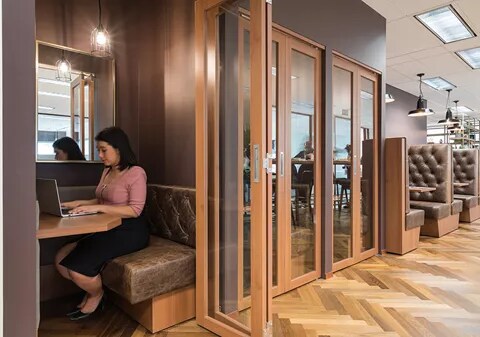
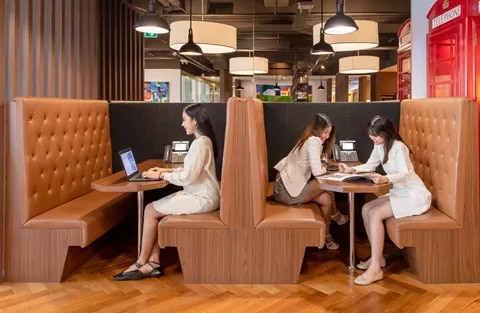
For this profile, an address alone usually isn’t enough. What’s missing is somewhere to actually work and meet clients on a regular basis, ideally without signing a long lease before the business model is fully proven. Coworking spaces in Paris solve this directly, offering a proper desk, fast secure Wi-Fi, printing, and bookable meeting rooms on flexible month-to-month terms.
There’s also a side effect worth noting. Working from a shared space alongside other founders and freelancers tends to generate referrals and collaborations that working alone at home simply doesn’t produce. For a side hustle approaching the point of going full-time, that network can matter as much as the desk itself.
A Practical Example of the Shift
Picture a marketing consultant working full-time at a mid-sized company while taking on freelance strategy projects for two or three small businesses in the evenings. For the first year, this runs entirely from a laptop: calls happen wherever there’s a quiet room, invoices go out with a home address, and meetings are handled over video by default because there isn’t really an alternative.
The turning point tends to come when a client wants an in-person kickoff meeting, or when a fourth client signs on and evening video calls start overlapping. At that point, the choice isn’t really about whether to invest in infrastructure, it’s about which kind. A virtual office would have solved the address and phone number problem from day one. A coworking desk becomes necessary once the volume of client contact outgrows what a laptop and a spare room can handle. Many consultants in this position end up using both: an address for invoicing and registration, and coworking hours booked specifically around client meetings.
Where the Two Overlap
Both profiles eventually run into the same three problems: an address that doesn’t inspire confidence, a phone number that doesn’t sound professional, and nowhere appropriate to meet a client in person. Both also share a legal reality worth checking early: salaried employees running a side activity should confirm their employment contract doesn’t include an exclusivity clause restricting outside professional work.
This pattern isn’t specific to France. A recent Allwork.Space report found remote workers internationally are increasingly running multiple income streams at once, often earning well beyond a single salary as a result. France’s strong remote work culture and straightforward micro-entrepreneur registration process make it particularly easy for a side activity to reach this point.
Formalising a Side Activity in France
Whichever profile fits best, registering a side activity generally covers the same ground: declaring it with URSSAF as a micro-entrepreneur, obtaining a SIRET number (issued automatically on registration), securing a business address for registration and invoicing, opening a dedicated account once turnover requires it, and checking the terms of any existing employment contract. A virtual office address satisfies the business address requirement throughout this process, which is why it’s a common starting point regardless of which side hustler profile applies.
Many people in Paris start with a virtual office and add coworking hours as the activity grows, using Servcorp’s Paris locations at 10 Avenue Kléber as the base.
Frequently Asked Questions